


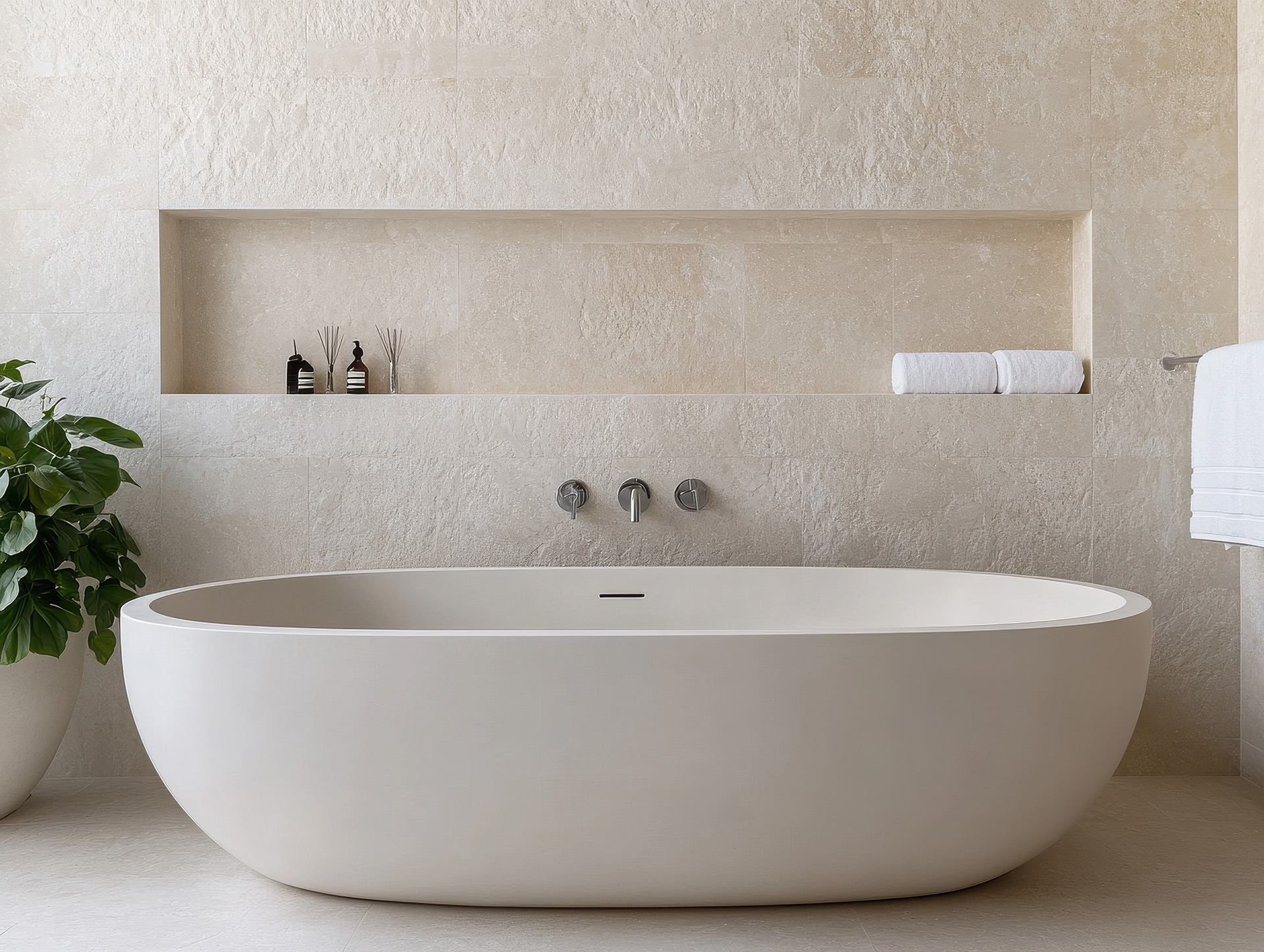
Dated tiles are one of the most common things Dubai homeowners and tenants want gone: beige bathroom walls, a busy kitchen splashback, or floor tiles that never matched the furniture. Retiling means chiselling, dust and days without a usable room, and in a rented apartment it is usually not allowed. Tile wrapping is the alternative: a self-adhesive vinyl film applied over the tiles you already have. Here is which tiles can be wrapped, where film struggles, what drives the price and how long it lasts.
What is tile wrapping?
Tile wrapping is the application of architectural vinyl film directly onto existing wall or floor tiles. The tiles stay in place underneath, so there is no demolition and no re-tiling.
The finishes are the same families we use on kitchens and bathrooms: marble (including large-vein and grey marble), wood grain, solid matte and gloss colours, metal and leather effects. Because the film sits on top of the tiles, it can be taken off later with gentle heat, which is why wrapping suits rented homes as well as owned ones.

Which tiles can be wrapped?
- Kitchen splashbacks. The tiles behind the hob and sink are the quickest win in most kitchens. Our kitchen splashback wrapping covers them without re-tiling, often alongside the cabinet doors so the whole kitchen changes in one visit.
- Bathroom wall tiles. Waterproof vinyl goes straight over existing wall tiles, often alongside the vanity and bathtub panel. See bathroom tile wrapping in Dubai for finishes and before-and-after photos.
- Floor tiles. Floors need a different, heavier film (more on that below). Floor and tile wrapping works over existing tiles or concrete in living areas, kitchens, showrooms and offices.
Wall tiles and floor tiles need different film
This is the point most DIY tile stickers get wrong. Wall film is decorative: it is designed to look good, resist splashes and wipe clean, but it is not built to be walked on. Floors need floor-grade vinyl, which is thicker and made to cope with foot traffic, scratches, spills and regular mopping. Anti-slip and protective films are also available for high-traffic areas.
Grout lines, texture and preparation
Vinyl follows the surface underneath it. That has three practical consequences:
- Deep grout lines and heavily textured tiles can show through the film. We check them first at the survey, before you commit to a finish. Flat, smooth tiles with shallow grout give the cleanest result.
- The tiles must be sound. Loose, cracked or hollow-sounding tiles need fixing before wrapping, because film will not hold a failing tile in place.
- The surface must be clean and dry. Grease on a splashback or soap residue on a bathroom wall stops adhesive bonding properly, so cleaning and degreasing is part of the job, not an extra.
If your tiles are not perfectly flat, choose a marble, concrete or matte finish: high-gloss solid colours show every imperfection.
When not to wrap your tiles
Wrapping changes the surface; it does not repair it. There are situations where we would steer you towards a different solution:
- Inside a shower enclosure that takes constant spray, and shower floors. Bathroom wrapping relies on water-resistant film and proper sealing, and the hardest zone for any adhesive film is the one that is soaked every day. If a zone is likely to fail, we will say so at the survey rather than wrap it anyway.
- Right behind a gas flame. Vinyl copes with normal kitchen temperatures but not direct high heat from flames or hot pans. Ask about the clearance needed behind your hob, or consider a glass panel for that section.
- Tiles with water behind them. If grout is crumbling, tiles are loose or there is a leak, fix the cause first. Wrapping over damp only hides the problem until it gets worse.
- Mosaics and deeply textured or handmade tiles. The texture will telegraph through the film, so the result will not look like the sample.
- When you want a new layout or new waterproofing. That is renovation work, not wrapping.
More on this in Bathroom Wrapping vs Renovation in Dubai.
What affects the cost of tile wrapping in Dubai?
Tile jobs are quoted on the actual space. The published figures are:
- Wrapping a small to average bathroom typically ranges from AED 3,500 to AED 8,000, depending on its size, what is wrapped (vanity only or the whole room) and the film chosen.
- Most full kitchen wraps cost AED 5,000 to AED 25,000. That range covers the cabinets and often the countertop and splashback, so ask for a quote if you only want the splashback done.
- Floor wrapping can cost up to 80% less than replacing the floor.
The things that move a tile quote up or down are the area in square metres, the number of cuts around sockets, taps, niches and corners, the depth of the grout and texture of the tiles, any repairs needed first, and whether the job needs floor-grade film.
How long does a tile wrap last?
With good-quality film and proper application, wrapped kitchen surfaces typically last 5 to 10 years, and our Grade A material comes with a 5-year warranty. On tiles, lifespan depends mostly on water and wear: a splashback or a dry bathroom wall will outlast a busy hallway floor or a wall next to the shower. Clean with mild soap and a soft cloth and avoid abrasive pads.
Tile wrapping vs retiling vs tile paint
- Retiling is permanent and handles any wet zone, but means demolition, dust and usually landlord or building approval.
- Tile paint or epoxy covers tiles without removal, but offers fewer looks and cannot be peeled off when you move out.
- Tile wrapping gives the widest choice of finishes with the least mess, and can be removed later.
Frequently asked questions
Can you wrap bathroom tiles in Dubai?
Yes. Waterproof vinyl is applied directly over existing wall tiles, with proper sealing at the edges. The zones that take constant spray, such as the inside of a shower enclosure, are checked at the survey because they are the hardest for any film.
Can you wrap floor tiles?
Yes, with floor-grade vinyl, which is thicker than wall film and made for foot traffic, scratches and cleaning. It goes over the existing tiles with no screed, no long drying time and no demolition. See our floor wrapping service for finishes.
Will the grout lines show through the wrap?
Shallow grout lines on flat tiles are usually not visible. Deep grout lines and textured tiles can show through, which is why we check them before you choose a finish.
Can tile wrap be removed when I move out?
Yes. The film is peeled off after warming it gently to soften the adhesive, and any residue is cleaned off. The wrap is designed to come off without damaging the tiles underneath, which is why wrapping is popular with tenants and landlords between tenancies.
Get a tile wrapping estimate
Send photos of your tiles, with rough measurements if you have them, on WhatsApp for a same-day estimate. We will tell you which areas wrap well and which finishes suit your tiles.


